
Look at any weekday morning at 7 AM, and you’ll see it: a river of headlights flowing from counties like Liberty, Rockwall, and Jackson toward urban skylines. This isn’t just traffic—it’s the physical manifestation of domestic migration in real time. Americans aren’t just moving to the Sun Belt; they’re strategically positioning themselves along what urban planners call “commuter corridors US“—the highways and transit lines that connect affordable living with economic opportunity.
In Episode 2 of our Great Migration series, we explore how three counties, Liberty County, Texas; Rockwall County, Texas; and Jackson County, Georgia have transformed from quiet rural areas into booming extensions of America’s largest metros. These aren’t bedroom communities in the traditional sense—they’re hybrid zones where local job growth meets regional commuting patterns, creating what one transportation expert calls “the new economic geography of work.”
At the end of this post, you can download our Sun Belt Commuter Corridors US PowerPoint template to fit your purpose. As the same diagram PowerPoint template series, you can also find our Top 12 Most Populous Countries,most dangerous cities in the US, Top 10 U.S. Cities with the Highest Violent Crime Rate, US Consolidated City County
- 18 Fastest Growing US Counties – Summary
- Episode 1 –The Exurban Explosion, Kaufman County, Texas; Dawson County, Georgia; and Pinal County, Arizona
- Episode 2 – Commuter Corridors US, Liberty County, Texas; Rockwall County, Texas; and Jackson County, Georgia
- Episode 3 – The Southwest Density Drivers, Comal, Texas; Ellis, Texas; and Osceola, Florida
- Episode 4 – Amenity Migration Hotspots,Brunswick County, North Carolina; Jasper County, South Carolina; and Madison County, Idaho
- Episode 5 – Highest Numeric Population Growth,Harris County, Texas; Maricopa County, Arizona; and Miami-Dade County, Florida
- Episode 6 – Tech Sprawl,Collin County, Texas; Clark County, Nevada; and Polk County, Florida
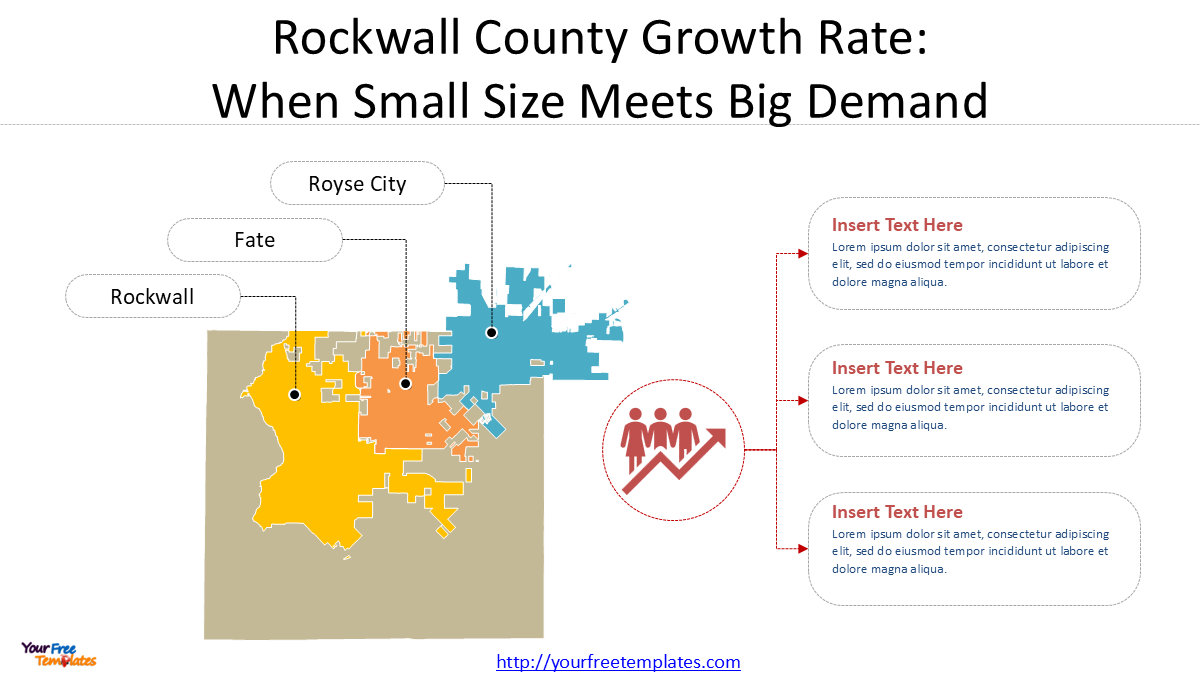
Rockwall County Growth Rate: When Small Size Meets Big Demand
With land scarce and prices climbing, Rockwall County presents a fascinating case study: Texas’s smallest county by area is achieving one of its highest growth rates through sheer efficiency. At approximately 4.9% annual growth, Rockwall isn’t just expanding—it’s intensifying.
Key Cities Driving Growth:
-
Fate: Experiencing astronomical growth; median listing price of $390K attracts high buyer volume.
-
Royse City: A major hub for housing development and a commuter favorite.
-
Rockwall: The established county seat and commercial center, with a higher median listing price of $550K.
 The Fate, TX Phenomenon: Building Up, Not Just Out
Drive through Fate today, and you’ll witness vertical growth that defies traditional exurban patterns. “Five years ago, we approved Fate’s first multi-family development,” recalls city planner Michael Torres. “Now, we’re seeing mixed-use complexes with retail on the ground floor and apartments above—that’s urban density in what was recently farmland.”
The numbers tell the story: while the county’s median home price hovers around $425,000, Fate TX new homes in master-planned communities like Lakeside still offer relative value compared to Dallas’s core suburbs. But here’s what newcomers often miss: that “short commute” to Dallas assumes ideal conditions. During peak hours, the 30-mile drive can stretch to 90 minutes—a trade-off thousands make for Lake Ray Hubbard views and top-rated schools.
The Land-Limited Future
“Rockwall County has about 5-7 years of developable land remaining,” estimates real estate analyst Jennifer Park. “After that, growth will mean redevelopment—tearing down older homes for denser housing, converting strip malls into town centers.” This reality is already shaping decisions: new developments increasingly feature smaller lots but premium amenities, appealing to empty-nesters and young professionals alike.
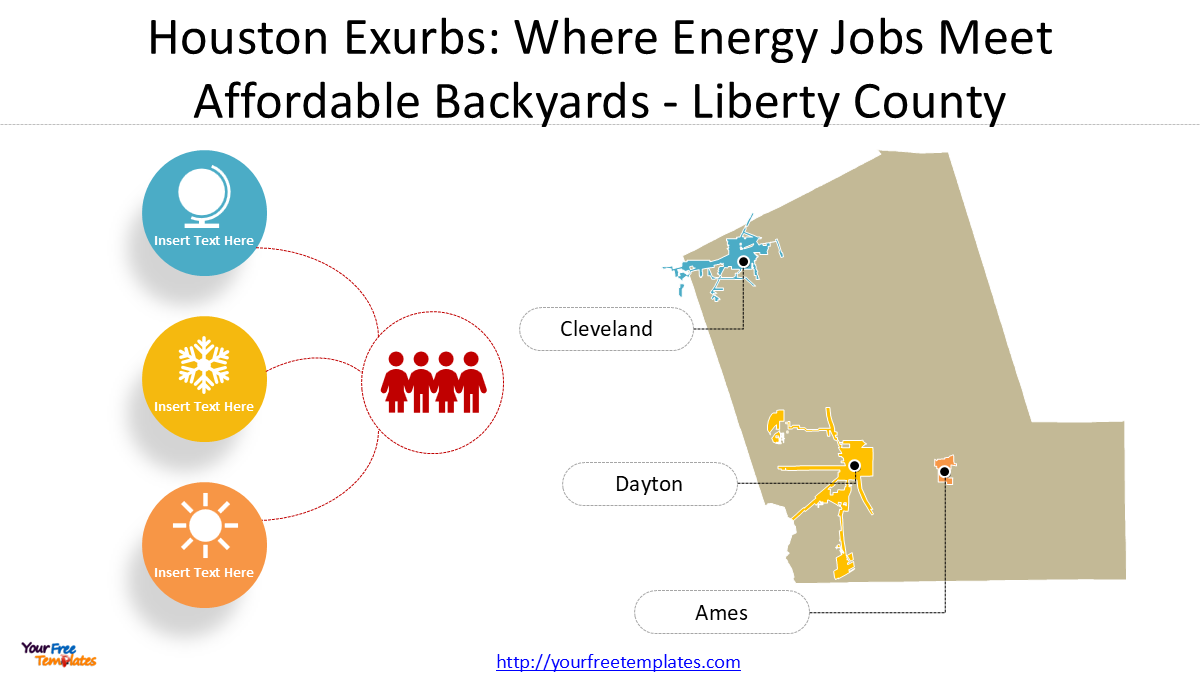
Houston Exurbs: Where Energy Jobs Meet Affordable Backyards
While Dallas expands eastward, Houston pushes northeast into Liberty County, where the growth rate hits approximately 5.0% annually. This represents a different migration pattern: one driven by energy sector salaries seeking maximum square footage.
Key Cities Driving Growth:
-
Dayton: Rapidly developing with large master-planned communities (e.g., a recently sold 2,601 sq ft home in Dayton sold for over $400K).
-
Cleveland: A town seeing robust residential and commercial growth.
-
Ames: Seeing increased residential development along major highways.
 Liberty County TX Affordability: The Numbers Don’t Lie
The math is compelling for Houston-area workers. A petroleum engineer earning $150,000 can buy a 3,000-square-foot home in Dayton for $400,000—or settle for half that space in The Woodlands for the same price. “We’re seeing a lot of first-time homebuyers from the refineries and chemical plants,” says local realtor Maria Gonzalez. “They want the space for growing families, and they’re willing to trade commute time for it.”
The Grand Parkway Effect
Completed segments of Highway 99 have been transformational. What was once a circuitous route into Houston now connects directly to the Energy Corridor. “The parkway cut my commute from 75 minutes to 50,” says chemical plant supervisor David Chen, who moved to Cleveland last year. “That 25 minutes daily is an extra 100 hours a year with my kids—that’s the real calculation people are making.”
The Water Reality
Growth here faces a unique challenge: flooding. Liberty County sits on a coastal plain, and new developments must meet stringent drainage requirements. “We’re requiring retention ponds that double as community amenities,” explains county engineer Robert Kim. “Every new subdivision needs to handle a 100-year storm event—that’s non-negotiable in this landscape.”
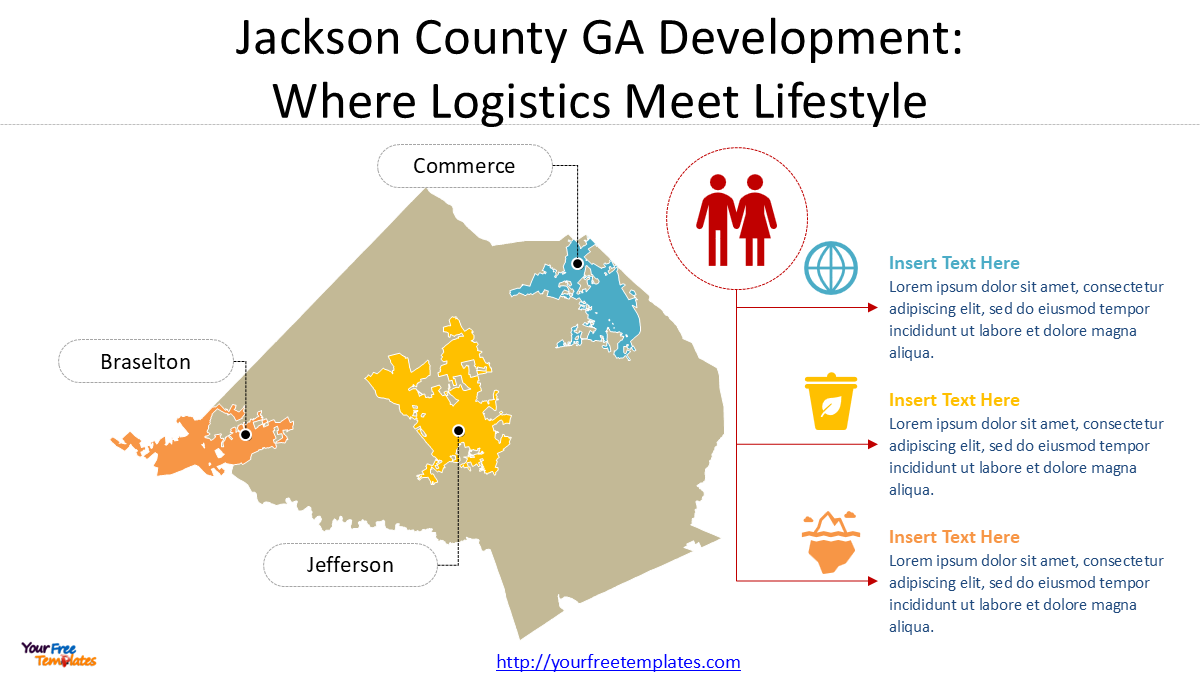
Jackson County GA Development: Where Logistics Meet Lifestyle
Northeast of Atlanta, Jackson County represents perhaps the most sophisticated evolution of the commuter corridor concept. At 4.8% annual growth, it’s not just absorbing Atlanta’s spillover—it’s creating its own economic gravity.
Key Cities Driving Growth:
-
Jefferson: The county seat, benefiting from both residential and commercial development.
-
Commerce: Home to major logistics centers, including the massive SK Battery America plant.
-
Braselton (Partial): An attractive, affluent community located near I-85.
 The I-85 Corridor: More Than Just a Highway
“Calling I-85 a commuter route misses the point,” says economic developer Sarah Johnson. “It’s an economic spine.” The widening to three lanes through the county has attracted more than commuters—it’s drawn billions in industrial investment. The SK Battery America plant alone represents a $2.6 billion investment creating 2,600 jobs.
Jackson County Industrial Growth: Beyond Warehouses
While logistics centers dot the landscape, the industrial growth here is increasingly high-tech. “We’re moving from distribution to manufacturing,” Johnson notes. “Advanced batteries, automotive components, food processing—these are clean industries paying $25-35 per hour, and they’re recruiting locally.”
The Live-Work Balance
This creates a unique dynamic: residents can work locally in manufacturing or commute to Atlanta’s corporate offices. “My husband manages a shift at the battery plant while I work remotely for an Atlanta marketing firm,” says resident Lisa Thompson. “We get the best of both worlds—his job didn’t exist here five years ago, and mine doesn’t care where I live.”
Commuter Corridors US: The New Economic Geography
These three counties reveal how commuter corridors are evolving from simple transportation routes into complex economic zones:
1. The Hybrid Commute is Standard
Pre-pandemic, commuting meant five days weekly. Today’s average along these corridors? 2.3 days. This shift has extended reasonable commuting distances and changed housing preferences. “People will tolerate a longer commute if it’s only twice a week,” notes transportation researcher Dr. Amanda Chen. “That’s fundamentally changed the geography of where people will live.”
2. Infrastructure Investment Dictates Growth
Notice the pattern: Highway 99 completion sparked Liberty County’s boom. I-85 widening accelerated Jackson County’s expansion. I-30 improvements sustained Rockwall County’s growth. “Infrastructure isn’t just supporting growth—it’s leading it,” says urban planner Marcus Wright. “The public investment comes first, then private development follows.”
3. The 30-Mile Rule Still Applies
Despite remote work, most commuters still won’t regularly travel beyond 30 miles one-way. All three counties sit within this threshold of their respective metros. “The magic number seems to be 45-60 minutes maximum,” says Wright. “Technology hasn’t changed human tolerance for commute time—just how often we must endure it.”
4. Job Growth Follows People (Eventually)
Initially, these areas were purely residential. Now, each is developing employment centers. Jackson County’s industrial parks, Rockwall’s commercial corridors, Liberty County’s retail hubs—all represent jobs following the migration flow. “It takes about 5-7 years after residential growth peaks for significant job growth to arrive locally,” notes economist Dr. James Wilson.
The Challenges: When Growth Outpaces Planning
Rapid expansion brings inevitable growing pains:
-
Traffic Evolution: Roads designed for farm equipment now handle tractor-trailers and commuting traffic simultaneously
-
School Strain: Jackson County built two new elementary schools in three years—and still uses portable classrooms
-
Utility Demands: Rockwall County’s water treatment plant is undergoing its second expansion in a decade
-
Identity Crisis: Longtime residents in all three counties express concern about losing community character
Looking Ahead: Smarter Corridors
The future of these commuter corridors involves smarter planning:
-
Transit Integration: Commuter bus lines are being studied for I-85 and I-30 corridors
-
Mixed-Use Nodes: Concentrating development around highway interchanges to preserve rural character elsewhere
-
Telecommuting Hubs: Shared office spaces in exurbs reducing peak-hour traffic
-
Green Corridors: Preserving natural buffers along transportation routes
Join us for Episode 3, where we travel to the Southwest to examine the growth drivers in another trio of US counties!
Looking for Premium maps, please visit our affiliate site: https://editablemaps.com/ or https://ofomaps.com/
Size:213K
Type: PPTX
Episode 2 : The Sun Belt Commuter Corridors US Template
Click the link to download it.
Aspect Ratio: Widescreen 16:9
Click the green button to download it.
Download the 16:9 Template