

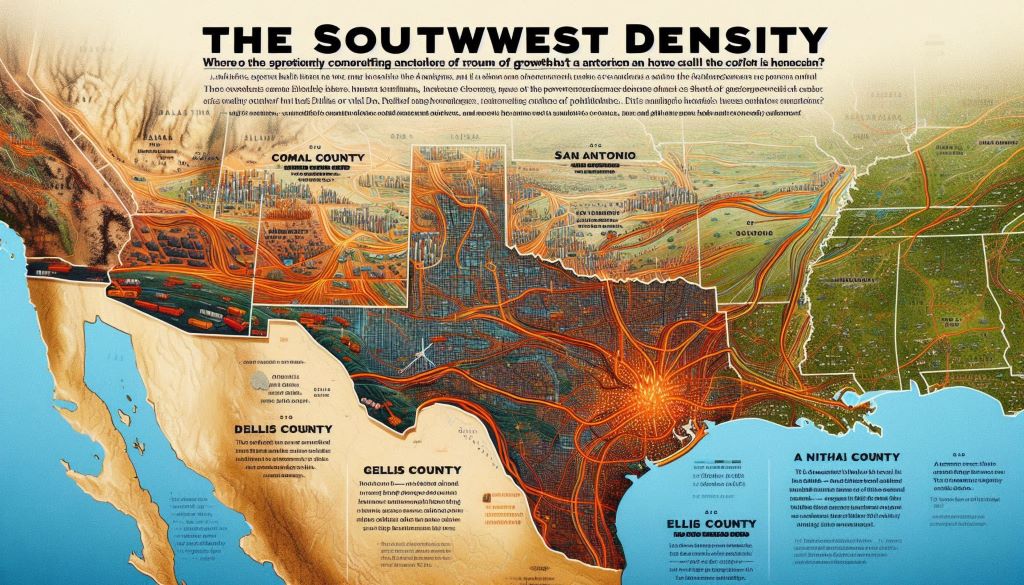
The American Southwest is no longer defined by empty desertscapes, but by intensifying clusters of growth—a phenomenon we call Southwest density. This isn’t just sprawl; it’s the strategic concentration of people, homes, and jobs in specific corridors between powerhouse metros like Dallas, Austin, San Antonio, and Orlando.
In Episode 3, we examine how this plays out in three distinct Southwest landscapes: the scenic San Antonio-Austin corridor, the southern frontier of the Dallas-Fort Worth sprawl, and the tourist-powered engine of Central Florida. The counties of Comal, Texas; Ellis, Texas; and Osceola, Florida reveal how migration isn’t just about crossing state lines—it’s about calculating commutes, school districts, and the price per square foot in America’s most competitive regions.
At the end of this post, you can download our The Southwest Density Drivers PowerPoint template to fit your purpose. As the same diagram PowerPoint template series, you can also find our
- 18 Fastest Growing US Counties – Summary
- Episode 1 –The Exurban Explosion, Kaufman County, Texas; Dawson County, Georgia; and Pinal County, Arizona
- Episode 2 – Commuter Corridors US, Liberty County, Texas; Rockwall County, Texas; and Jackson County, Georgia
- Episode 3 – The Southwest Density Drivers, Comal, Texas; Ellis, Texas; and Osceola, Florida
- Episode 4 – Amenity Migration Hotspots,Brunswick County, North Carolina; Jasper County, South Carolina; and Madison County, Idaho
- Episode 5 – Highest Numeric Population Growth,Harris County, Texas; Maricopa County, Arizona; and Miami-Dade County, Florida
- Episode 6 – Tech Sprawl,Collin County, Texas; Clark County, Nevada; and Polk County, Florida
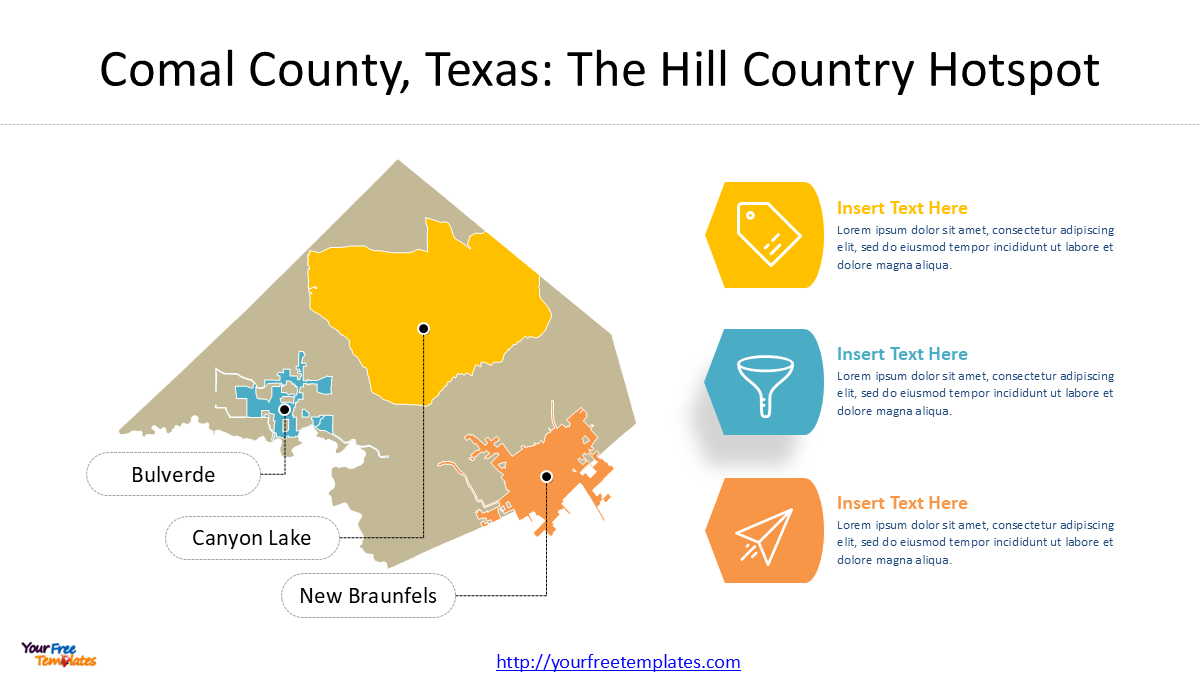
Comal County TX Population: The Hill Country’s Balancing Act
Nestled between San Antonio and Austin, Comal County represents migration driven by desire, not just necessity. With a 4.0% annual growth rate, it’s absorbing professionals who could afford to live in either city but choose the Hill Country lifestyle instead.
Key Cities Driving Growth:
-
New Braunfels: The primary engine, consistently ranking among the fastest-growing large cities in the US.
-
Bulverde: An increasingly popular northern suburb seeing substantial residential development.
-
Canyon Lake (CDP – Census Designated Place): Attracts residents seeking scenic lakefront living and outdoor amenities.
 The New Braunfels TX Growth Phenomenon
“Ten years ago, people asked if I was moving to the country,” says tech manager Rachel Chen, who relocated from Austin to New Braunfels. “Today, my neighbors are engineers, doctors, and remote workers. We didn’t move away from opportunity—we brought it with us.”
This shift is visible in New Braunfels TX growth statistics. The city has added over 35,000 residents since 2010, transforming from a tourist destination into a full-fledged suburban center. The attraction isn’t just the Guadalupe River and German festivals—it’s the practical math: a 3,000-square-foot home here costs 30% less than in Austin’s closer suburbs, with arguably better schools and less traffic.
The Infrastructure Tightrope
Growth here faces unique environmental constraints. “The Hill Country’s karst geology means water percolates straight through limestone,” explains county environmental planner Mark Rodriguez. “One poorly placed development can affect wells miles away. We’re requiring advanced wastewater systems that cost developers 40% more than standard systems—and they’re still building.”
This creates a paradox: strict environmental protections that preserve the area’s beauty also limit housing supply, pushing prices upward even as demand increases. It’s a premium growth model that shows no signs of slowing as the San Antonio-Austin corridor effectively merges into a single economic region.
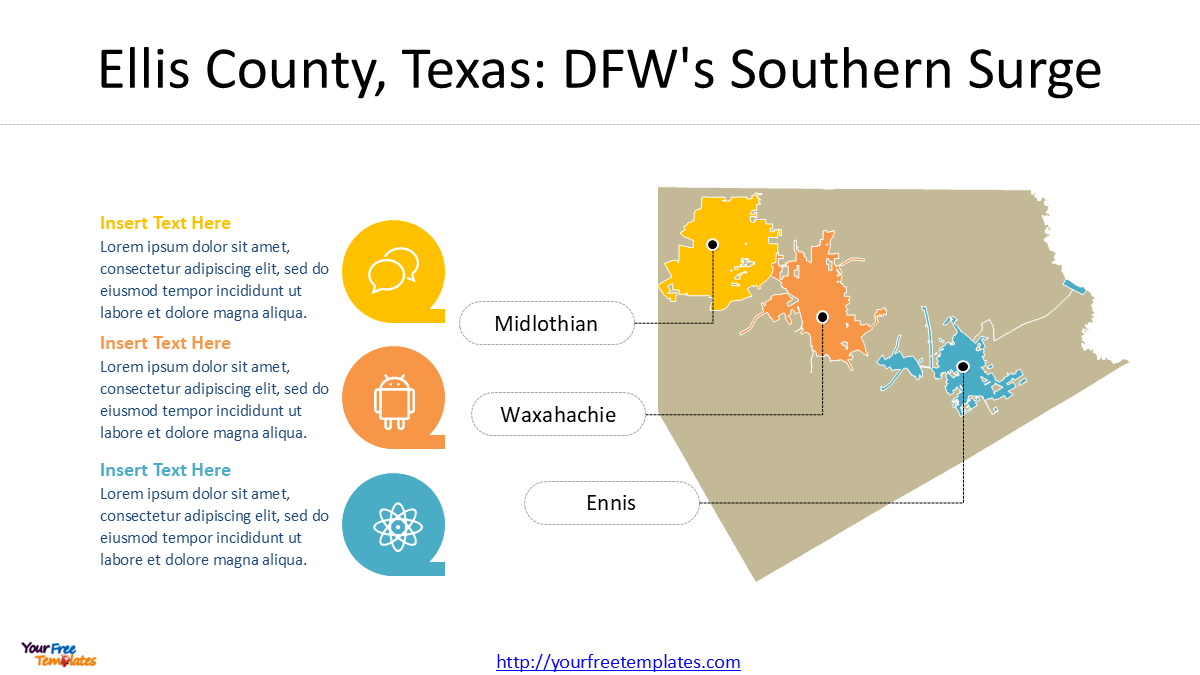
Ellis County TX Real Estate: Where Dallas Sprawl Meets Local Industry
South of Dallas, Ellis County tells a different story—one where industrial might fuels residential demand. With a 4.5% annual growth rate, this isn’t just spillover from Dallas; it’s a calculated move by families seeking both affordability and local employment.
Key Cities Driving Growth:
-
Waxahachie: A thriving, historic city and the county seat, drawing major residential and commercial projects.
-
Midlothian: Known for its strong industrial base (cement, steel) which supports local job growth.
-
Ennis: A growing community benefiting from new road infrastructure and affordable land.
 Waxahachie TX Housing: History Meets Hyper-Growth
Drive through Waxahachie’s historic downtown, and you’ll see 19th-century courthouses surrounded by construction cranes. “We’re approving 500-700 new housing units annually,” says planning director Lisa Marshall. “But we’re not just building subdivisions—we’re requiring traditional neighborhood designs that maintain our historic character.”
The Waxahachie TX housing market splits neatly in two: restored Victorians near downtown selling for $400,000+, and new construction on the outskirts at $300,000 for 2,500 square feet. Compare this to $500,000 for similar space in Dallas’s northern suburbs, and the migration math becomes clear.
The Jobs-First Advantage
What distinguishes Ellis County is its industrial base. Midlothian’s cement plants and steel mills provide 8,000 local jobs paying an average of $75,000 annually. “My husband works at the steel mill, and I commute to Dallas for my marketing job,” says resident Sarah Johnson. “We couldn’t afford this lifestyle anywhere closer to the city.”
This dual-income model—one local industrial job, one Dallas professional job—creates financial stability that pure commuter towns lack. It’s why Ellis County weathered recent economic shifts better than many exurbs: when Dallas jobs grew uncertain, local industry provided a buffer.
Fastest Growing Counties Texas: The Comal-Ellis Comparison
Placing Comal and Ellis counties side-by-side reveals Texas’s dual growth engines:
Growth Driver Comparison:
| Factor | Comal County | Ellis County |
|---|---|---|
| Primary Draw | Lifestyle & Location | Affordability & Jobs |
| Median Home Price | $425,000 | $325,000 |
| Key Employer | Healthcare/Remote Work | Manufacturing/Industrial |
| Commute Pattern | Split (SA/Austin) | Primarily to Dallas |
| Growth Constraint | Environmental Regulations | Infrastructure Pace |
“Comal is the aspirational choice for those who’ve ‘made it,’ while Ellis is the practical choice for those building wealth,” observes Texas demographer Carlos Mendez. “Both are among the fastest growing counties Texas has seen in decades, but they’re serving different segments of the migration stream.”
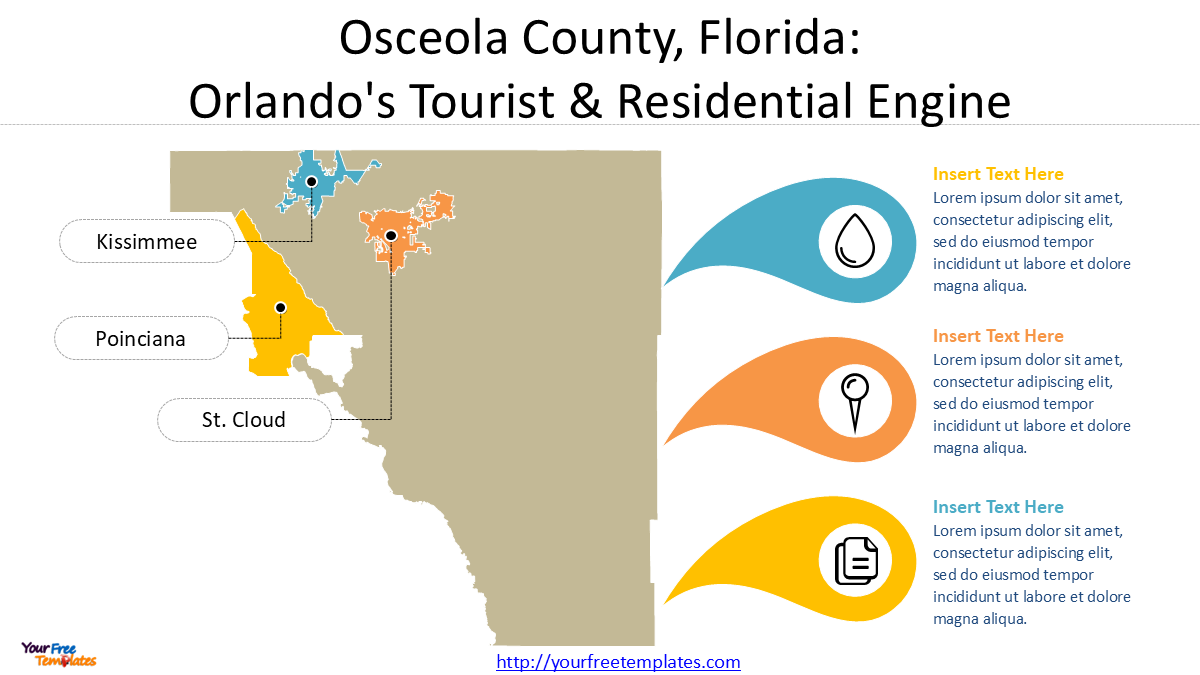
Osceola County FL Growth: Tourism’s Double-Edged Sword
In Central Florida, Osceola County’s 3.8% annual growth presents the most complex migration story of our trio. Here, domestic migration collides with international tourism in a housing market that serves two masters.
Key Cities Driving Growth:
-
Kissimmee: The county seat and a central hub for residential and short-term rental activity.
-
St. Cloud: A fast-growing residential community offering lower-cost housing than Orlando.
-
Poinciana (CDP): A massive master-planned community attracting a diverse, growing population.
 The Orlando Tourism Growth Effect
“Every new hotel room creates 1.5 support jobs,” explains tourism economist Amanda Chen. “Those jobs need housing, which drives Osceola County FL growth, but also competes with vacation rentals.” The numbers are staggering: the county added 45,000 residents since 2020 while hosting 12 million annual tourists.
This creates a unique housing dynamic. In communities like Kissimmee, you’ll find identical townhomes on the same street—one occupied by a family of four, the next operated as a short-term rental for Disney visitors. “We’ve had to create separate zoning categories,” says county planner David Wilson. “Some subdivisions are now 50% investor-owned, which strains schools and roads designed for permanent residents.”
The Affordability Mirage
While Osceola County appears more affordable than Orange County (Orlando proper), the reality is nuanced. Yes, median prices are 25% lower, but insurance costs are 40% higher, and HOA fees in tourist-area communities often include short-term rental management costs. “Your $300,000 home comes with a $6,000 annual insurance bill and $400 monthly HOA,” says realtor Maria Gomez. “First-time buyers get sticker shock after the mortgage approval.”
The Southwest Density Formula: What Connects These Stories
Despite different geographies, these three counties share common drivers:
-
The 60-Minute Commute Rule: All sit within 60 minutes of major employment centers—the maximum most commuters will tolerate even in hybrid work arrangements.
-
The Infrastructure Catch-22: Each struggles with road capacity, school construction, and utility expansion trying to keep pace with growth. Comal worries about water, Ellis about highways, Osceola about tourist-resident balance.
-
The Local Economy Evolution: None are pure bedroom communities. Each has developed significant local employment—Comal in healthcare and remote work hubs, Ellis in manufacturing, Osceola in tourism support services.
-
The Preservation Tension: Historic character versus new development creates constant debate. Waxahachie protects its Victorian homes, New Braunfels regulates riverfront development, Kissimmee debates short-term rental caps.
Looking Ahead: Sustainable Density or Gridlocked Growth?
The future of Southwest density hinges on three factors:
-
Water Management: Comal County’s aquifer protections may become a model for arid regions
-
Transportation Innovation: Ellis County’s highway expansions versus potential rail connections
-
Tourism Balance: Whether Osceola County can diversify beyond hospitality dependence
In Episode 4 as we explore the explosive, geographically isolated growth occurring in the Southeast and Northwest corners of the country!
Looking for Premium maps, please visit our affiliate site: https://editablemaps.com/ or https://ofomaps.com/
Size:179K
Type: PPTX
Episode 3 : The Southwest Density Drivers Template
Click the link to download it.
Aspect Ratio: Widescreen 16:9
Click the green button to download it.
Download the 16:9 Template