


Forget percentages for a moment—the most powerful force reshaping America’s urban landscape is raw, numerical heft. We’re talking about Highest Numeric Population Growth: the sheer, staggering volume of people—tens of thousands monthly—pouring into a handful of metropolitan giants. This isn’t about which county grew the fastest proportionally, but which added the equivalent of an entire city’s population in a single year. It’s a testament to economic gravity, where opportunity concentrates on a scale that dwarfs all others.
In Episode 5, we examine the unparalleled absorptive power of three demographic titans: Harris County, Texas; Maricopa County, Arizona; and Miami-Dade County, Florida. These counties don’t just lead their states; they dominate the national charts for total new residents, each powered by a distinct engine—global energy and medicine, domestic relocation from the West Coast, and international capital flow. Their growth is less a trend and more a geographic inevitability.
At the end of this post, you can download our Highest Numeric Population Growth PowerPoint template to fit your purpose. As the same diagram PowerPoint template series, you can also find our
- 18 Fastest Growing US Counties – Summary
- Episode 1 –The Exurban Explosion, Kaufman County, Texas; Dawson County, Georgia; and Pinal County, Arizona
- Episode 2 – Commuter Corridors US, Liberty County, Texas; Rockwall County, Texas; and Jackson County, Georgia
- Episode 3 – The Southwest Density Drivers, Comal, Texas; Ellis, Texas; and Osceola, Florida
- Episode 4 – Amenity Migration Hotspots,Brunswick County, North Carolina; Jasper County, South Carolina; and Madison County, Idaho
- Episode 5 – Highest Numeric Population Growth,Harris County, Texas; Maricopa County, Arizona; and Miami-Dade County, Florida
- Episode 6 – Tech Sprawl,Collin County, Texas; Clark County, Nevada; and Polk County, Florida
Highest Numeric Population Growth: The Scale of the Shift
Before diving into individual counties, consider what “highest numeric growth” truly means. While exurban counties like Kaufman post 6% growth, their small starting populations mean they might add 10,000 people. Harris County, at just 2% growth, adds over 80,000 annually—equivalent to absorbing a city the size of Bethlehem, Pennsylvania, every single year.
“This is the difference between a boomtown and a powerhouse,” explains demographer Dr. Amanda Chen. “The exurbs are experiencing explosive but contained growth. The giants are executing managed, massive-scale absorption. They’re not just participating in the domestic migration trend; they’re defining its ultimate destinations.”
Harris County TX Migration: The Engine of Texas Expansion
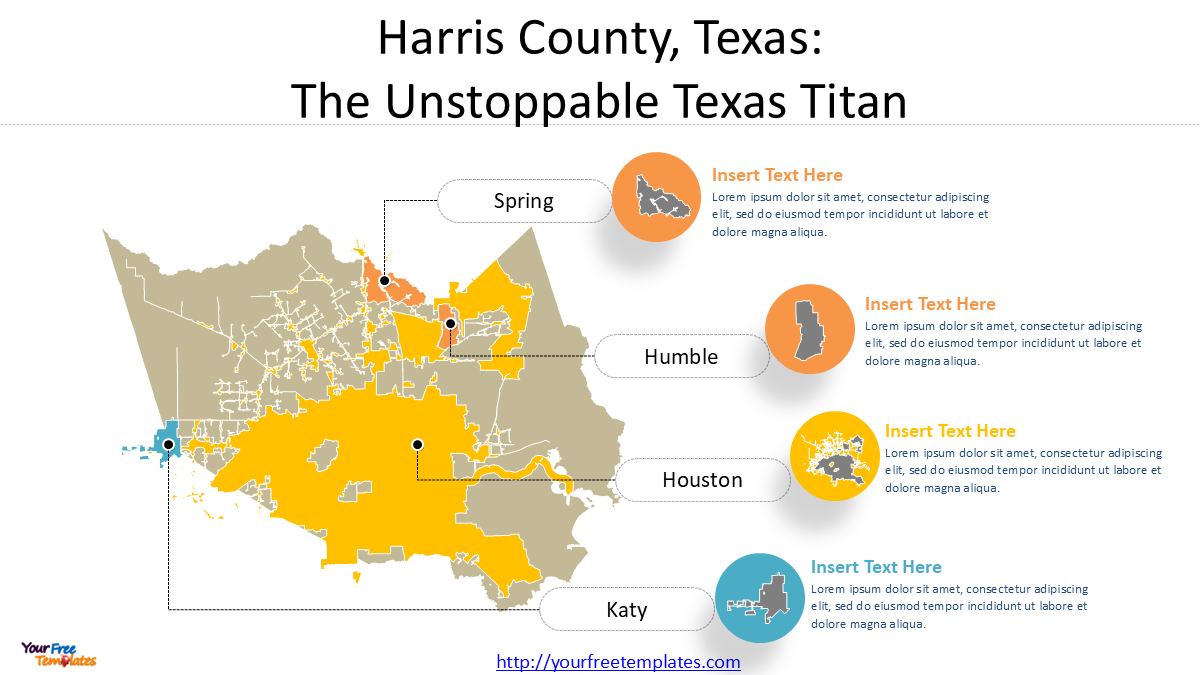
With the highest absolute numeric gain in the nation, Harris County is a demographic force of nature. Its roughly 2.0% annual growth rate translates to a staggering volume of newcomers that would overwhelm smaller regions.
Key Cities Driving Growth:
-
Houston: The core city, driving substantial internal and international growth.
-
Katy/Cypress (Unincorporated): Massive unincorporated areas on the west/northwest seeing relentless housing construction.
-
Humble/Spring (Unincorporated): Rapidly expanding areas on the northeast and north sides.
 Houston Economic Diversity: Beyond Oil
The classic narrative of migration to Texas for energy jobs is outdated. “Yes, the oil and gas sector is a pillar, but it’s no longer the sole driver,” says economic analyst Mark Rodriguez. “The Texas Medical Center is now the largest medical complex on the planet, employing over 120,000. Our port is among the busiest, and our aerospace sector is exploding. This Houston economic diversity creates a resilient job market that attracts people from every sector.”
This diversity fuels a two-stream migration pattern. The first is skilled domestic workers from the Midwest and California drawn to specific industries. The second is a robust international migration stream, with Harris County consistently ranking as a top destination for new arrivals, particularly from Asia and Latin America, who contribute to its renowned cultural and entrepreneurial vibrancy.
The Infrastructure Challenge
Growth at this scale creates unique challenges. “We’re not just building neighborhoods; we’re building cities within the city,” notes a county infrastructure planner. The unincorporated areas of Katy and Cypress are essentially becoming new municipalities overnight, requiring complete networks of roads, utilities, and schools. The perennial battle against flooding also dictates a more expensive, resilient approach to development, influencing where and how growth can occur.
Maricopa County Population: The Phoenix of American Metros
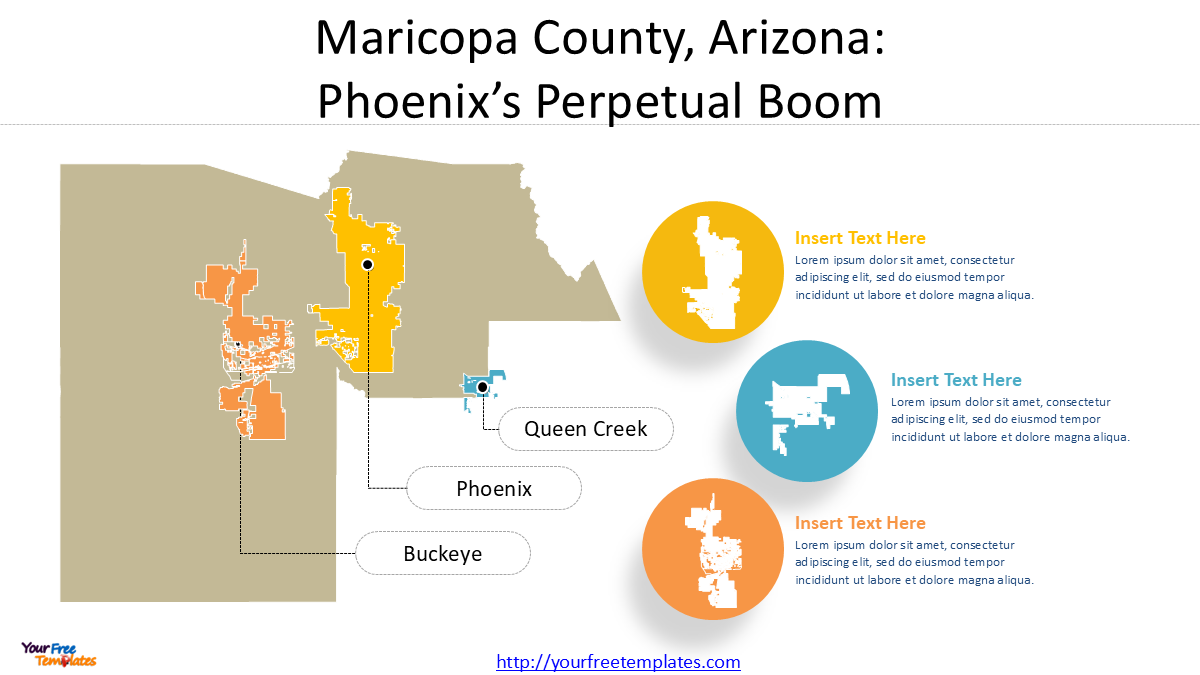
Maricopa County’s growth story is the definitive case study of Phoenix domestic migration. Its consistent place among the top five counties for numeric gains is a direct result of its powerful appeal to West Coast residents seeking a different lifestyle.
Key Cities Driving Growth:
-
Phoenix: The core city, which still adds the most people numerically.
-
Buckeye: Experiencing explosive percentage growth as an outer-ring suburb.
-
Queen Creek (Partial): Highly desirable exurb on the southeast edge.
 The California Calculus
“The math is simple for many of my clients,” says real estate agent Sarah Lin, who specializes in relocations from Los Angeles and the Bay Area. “Sell a 1,500-square-foot California bungalow for $1.2 million, buy a 3,000-square-foot Arizona modern for $600,000, and bank the rest. The domestic migration flow is a wealth transfer on a massive scale.”
This migration is reshaping the county’s geography. While the city of Phoenix itself continues to add residents, the explosive growth is in cities like Buckeye on the western frontier, where master-planned communities rise from the desert with stunning speed. This creates the “doughnut effect”—intensification at the core and rapid expansion at the edges—that characterizes true mega-region growth.
The Water Equation
No discussion of Arizona’s future is complete without addressing its limiting factor: water. “Every new development must prove a 100-year assured water supply,” explains water policy expert Carlos Mendez. “This is increasingly moving growth toward US city core growth and infill projects, as securing water for far-flung greenfield developments becomes legally and politically fraught.” The county’s long-term growth is now directly tied to innovation in water reclamation and conservation.
 Miami-Dade Growth: The International Powerhouse
Miami-Dade County operates in a different league. Its 2.3% annual growth is less about domestic relocation from other states and more about its role as a global capital. This is the epicenter of Miami international migration, making it less a Sun Belt city and more a burgeoning global city-state.
Key Cities Driving Growth:
-
Miami: The core city, leading both residential and commercial development.
-
Doral: A modern, highly international city near the airport.
-
Hialeah: A dense, culturally vital city seeing continued population increases.
Capital and Culture Migration
“Forget the ‘flight from New York’ narrative of the 2020s,” says financial consultant Elena Ruiz. “The bigger story is the ‘flight from Bogotá, São Paulo, and Mexico City.’ We’re seeing an influx of entrepreneurs, investors, and digital nomads who see Miami as the stable, business-friendly hub for all of Latin America.” This influx fuels a high-end real estate boom and a rapid expansion in finance and tech sectors.
This growth pattern favors vertical density. Unlike the horizontal sprawl of Texas and Arizona, Miami-Dade builds upward. Neighborhoods like Edgewater and the Downtown core are forests of construction cranes, adding thousands of condo units to house the influx. This creates intense pressure on urban infrastructure and contributes to the county’s severe affordability crisis for service workers.
The Resilience Imperative
Growth here is framed by an existential threat: sea-level rise. “We can’t talk about adding residents without talking about elevating roads, installing massive pumping systems, and hardening our coastline,” says resilience officer Maria Lopez. “The cost of growth here includes a massive climate adaptation bill that other counties don’t face.” This makes Miami-Dade’s future the most complex, intertwining demographic success with environmental survival.
The Common Thread: Absorption Capacity
What links these three giants is their unparalleled ability to absorb growth. They possess:
-
Economic Critical Mass: Diverse, layered economies that can employ millions across multiple skill levels.
-
Global Connectivity: Major international airports and trade links that anchor them in global networks.
-
Cultural Infrastructure: Established arts, culinary, and educational institutions that make them desirable beyond mere job listings.
-
The “Big City” Magnetism: An undeniable pull for ambitious individuals seeking opportunity, anonymity, or community on a grand scale.
Their growth is less about cheap land (though it helps in Phoenix and Houston’s exurbs) and more about concentrated opportunity. They are the endpoints of ambition, for both the recent graduate from Ohio and the entrepreneur from Colombia.
These three counties demonstrate that the largest absolute population increases occur where economic opportunity, affordable land (Harris and Maricopa), and international connectivity (Harris and Miami-Dade) converge. Join us for the final installment, Episode 6, as we examine the final three numeric giants and wrap up our survey of the Fastest-Growing US Counties!
Looking for Premium maps, please visit our affiliate site: https://editablemaps.com/ or https://ofomaps.com/
Size:553K
Type: PPTX
Episode 4 : Highest Numeric Population Growth Template
Click the link to download it.
Aspect Ratio: Widescreen 16:9
Click the green button to download it.
Download the 16:9 Template