

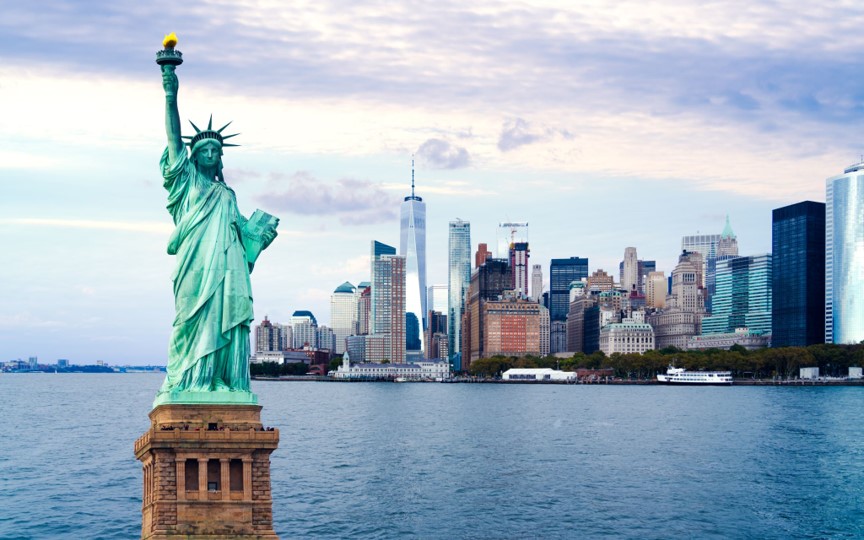
When people search for where immigrants in Queens live, or wonder about the communities of immigrants in Brooklyn, or look into the growing population of immigrants in the Bronx, they’re uncovering the fundamental truth about New York City: it is a collection of nations, each borough a continent of its own. This isn’t a story of a single melting pot, but of distinct, thriving ecosystems—from the dizzying Asian fusion of Flushing to the Caribbean rhythms of the Grand Concourse.
In Episode 2 of The New American Mosaic, we move beyond Manhattan to map the true engines of the city’s legendary diversity. We examine the established and emerging hubs that define each borough: the global village that is Queens, the neighborhood-anchored resilience of Brooklyn, and the affordable, dynamic resurgence of the Bronx. This is where New York’s identity is being built, block by block, by the world’s communities.
At the end of this post, you can download our The New York Mosaic PowerPoint template to fit your purpose. As the same diagram PowerPoint template series, you can also find our Top 12 Most Populous Countries, most dangerous cities in the US, Top 10 U.S. Cities with the Highest Violent Crime Rate, US Consolidated City County
The New American Mosaic: Mapping the 2026 Immigrant Population
- Episode 1-The Mega-Gateways, Los Angeles, Miami-Dade, and Harris County.
Immigrants in Queens: The World’s Most Diverse Urban Experiment
Queens doesn’t just host diversity—it engineers it at a scale unmatched anywhere in the Western Hemisphere. This is where The New American Mosaic achieves its highest resolution, with immigrants from over 120 countries creating neighborhoods that function as self-contained global villages.
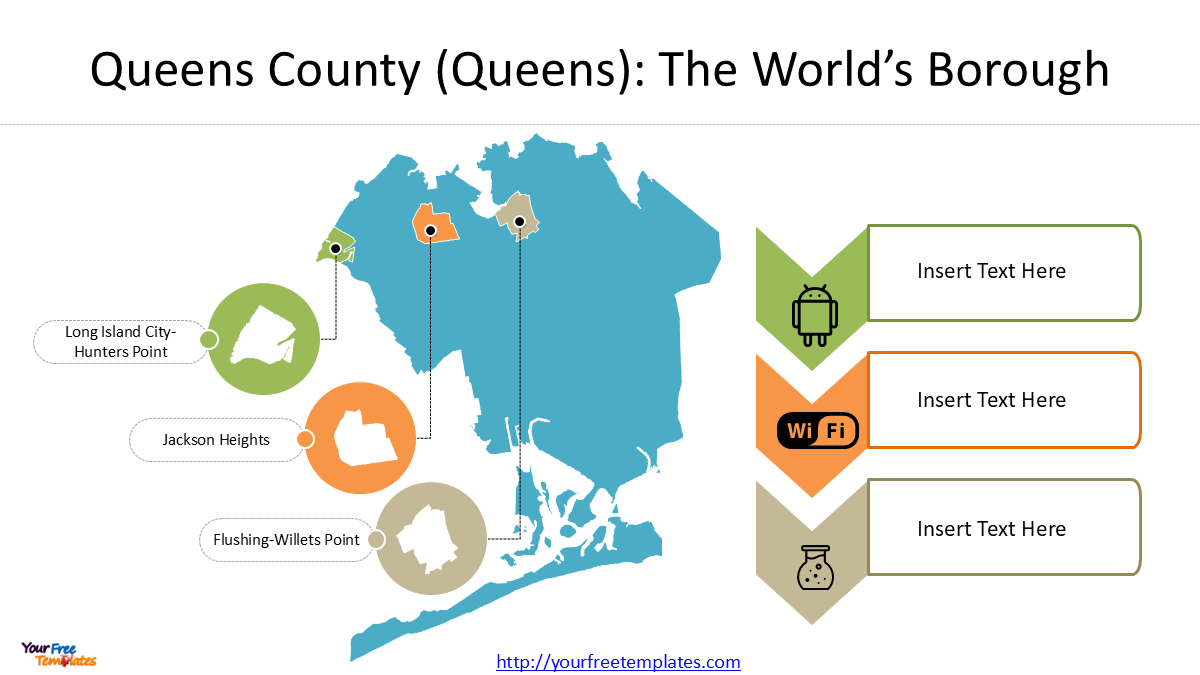
Top 3 Neighborhoods & Origins:
-
Flushing: The heart of NYC’s largest and fastest-growing Chinese community, which has now surpassed Manhattan’s Chinatown in size and economic influence.
-
Jackson Heights: A vibrant “Little India” and “Little Colombia” where South Asian and Latin American cultures intersect daily.
-
Long Island City: A center for urban development where high-skilled tech and finance workers from India and China are moving into new luxury high-rises.
Flushing’s Economic Alchemy
“People talk about multiculturalism as if it’s about food festivals,” says urban economist Dr. Lin Chen. “But in Flushing’s Chinese community, we’re seeing something deeper: the creation of a parallel innovation economy. We have Chinese-born venture capitalists funding Chinese-American biotech startups, while traditional herbal medicine shops incorporate telehealth services. This isn’t an ethnic enclave—it’s a vertically integrated economic ecosystem.”
What makes this quintessentially The New American Mosaic is how it attracts complementary communities. Flushing’s success has drawn Korean healthcare providers, Vietnamese restaurateurs, and Tibetan cultural centers, creating intersections where Korean acupuncturists refer patients to Chinese herbalists, who then send their staff to Vietnamese lunch spots. The result is economic interdependence that transcends ethnic boundaries.
Jackson Heights: The Fusion Kitchen of Cultures
Walk through Jackson Heights on a Sunday afternoon, and you witness The New American Mosaic in motion: elderly Sikh men playing chess beside Colombian families preparing for church, while Bengali teenagers create TikTok videos that blend Bollywood with reggaeton. “This is where cultures don’t just coexist—they cross-pollinate,” notes cultural anthropologist Dr. Anika Verma. “You see it in the ‘Indo-Mex’ fusion restaurants, hear it in the Spanglish-Hindi hybrid language developing among second-generation youth, and feel it in the religious syncretism at local community centers.”
Immigrants in Brooklyn: The Neighborhood as Cultural Anchor
While gentrification dominates headlines, Brooklyn’s immigrant communities are engaged in a more profound project: creating resilient cultural ecosystems that preserve heritage while adapting to American realities. This is The New American Mosaic at its most rooted—neighborhoods that serve as both launching pads and lifelong anchors.
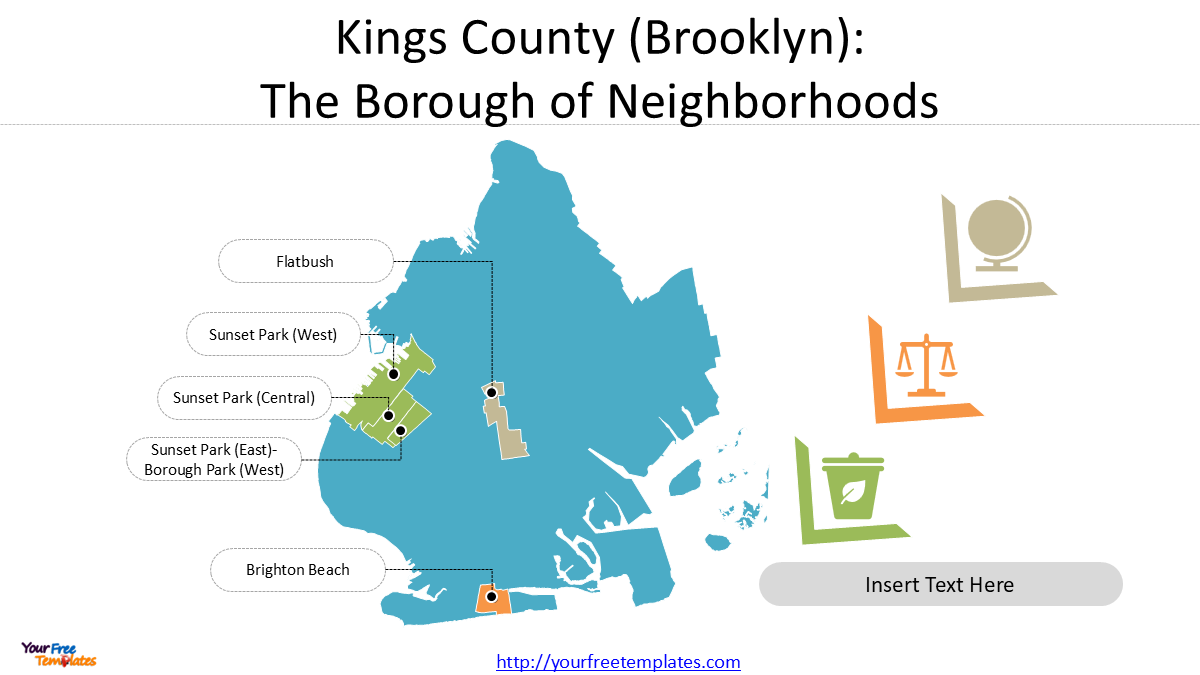
Top 3 Neighborhoods & Origins:
-
Sunset Park: Home to a massive “dual enclave” of Chinese and Mexican residents, fueling the local manufacturing and retail sectors.
-
Brighton Beach: Famous as “Little Odessa,” the primary destination for the Ukrainian and Russian-speaking diaspora.
-
Flatbush (Little Caribbean): A cultural anchor for immigrants from Jamaica, Haiti, and Trinidad & Tobago.
Sunset Park’s Dual Economy Model
In Sunset Park, two immigrant streams have created something remarkable: not competition, but complementarity. The Chinese community dominates 8th Avenue with manufacturing and retail, while the Mexican community thrives on 5th Avenue with restaurants and services. “They’re like twin engines powering the same neighborhood,” explains councilwoman Alexa Avilés. “Chinese construction firms hire Mexican workers. Mexican restaurants cater Chinese business meetings. Their children attend the same schools. This is The New American Mosaic as economic symbiosis.”
This creates extraordinary resilience. During pandemic lockdowns, while national chains struggled, these hyper-local networks continued operating through community-based delivery systems and mutual aid networks. The lesson? The New American Mosaic isn’t just culturally rich—it’s economically robust.
Brighton Beach’s Evolving Tapestry
Brighton Beach reveals how The New American Mosaic constantly rewrites itself. “Little Odessa used to mean one thing,” says historian Dmitri Volkov. “Today, it’s a complex layering: Soviet-era Jews, post-Soviet professionals, Ukrainian war refugees, and Central Asian immigrants. They share Russian language but have completely different experiences of migration.”
This complexity manifests in surprising ways: Soviet-style cafés now serve halal options, Ukrainian aid organizations share buildings with Russian language schools, and Uzbek restaurants feature both traditional plov and kosher adaptations. It’s a masterclass in how The New American Mosaic accommodates multiple narratives within shared geography.
Immigrants in the Bronx: The Affordable Gateway’s Renaissance
The Bronx represents The New American Mosaic‘s most pragmatic dimension—where communities leverage affordability to build wealth and stability. This isn’t about temporary settlement; it’s about strategic foundation-building.
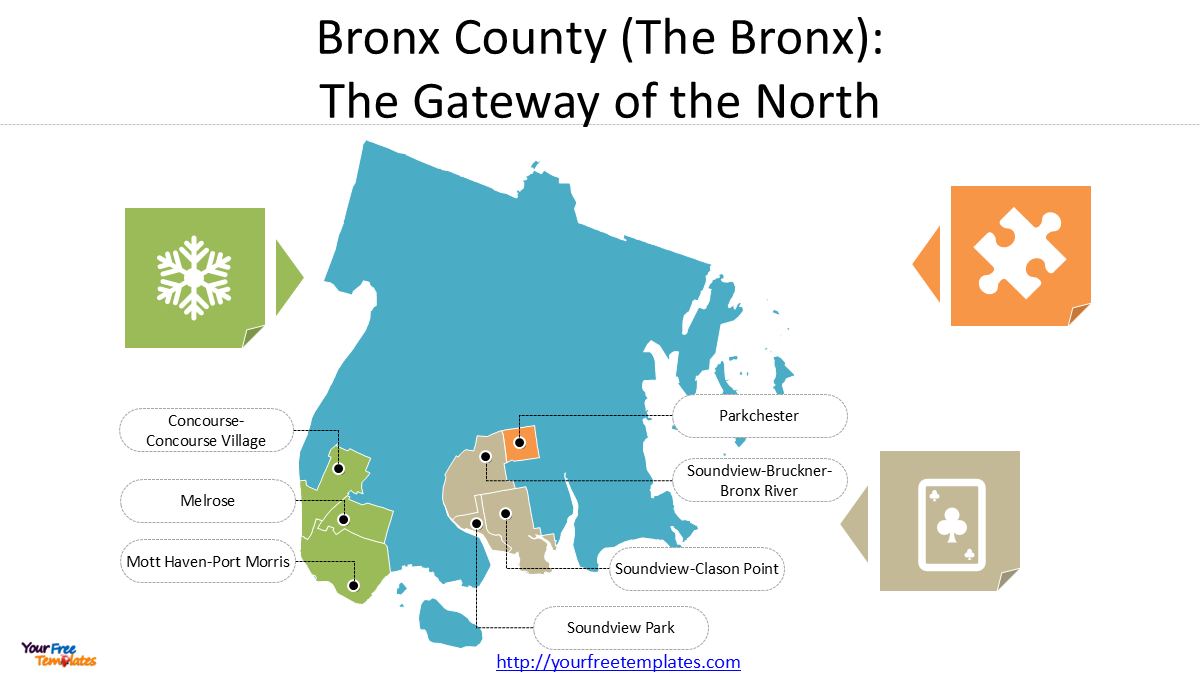
Top 3 Neighborhoods & Origins:
-
South Bronx: A primary hub for the Dominican Republic diaspora, which remains the largest immigrant group in the city.
-
Parkchester: A rapidly growing area for South Asian (particularly Bangladeshi) and West African (Ghanaian and Gambian) communities.
-
Soundview: A diverse working-class neighborhood where Mexican and Jamaican families are driving local commercial growth.
The Dominican Blueprint for Community Capitalism
To understand the South Bronx Dominican population, observe their economic progression: new arrivals start in service jobs, pool resources to purchase multi-family homes, then expand into commercial real estate. “This isn’t accidental mobility,” notes developer Carlos Rodríguez. “It’s a deliberate strategy—what I call ‘community capitalism.’ They create ecosystems where Dominican-owned supermarkets supply Dominican restaurants staffed by Dominican workers who bank at Dominican credit unions.”
This vertically integrated approach has turned the South Bronx into a case study in immigrant-driven urban revitalization. Vacant lots become community gardens, then housing developments, then commercial corridors—all driven by immigrant capital and vision.
The West African Professional Wave
What many miss in Parkchester is the quiet arrival of highly educated African immigrants choosing the Bronx strategically. “I’m a nurse practitioner who could live anywhere,” says Ghanaian immigrant Kofi Mensah. “I choose the Bronx because here I’m building something—a clinic serving my community, a cultural center for my children, connections that help new arrivals. This is The New American Mosaic as deliberate community design.”
These professionals bring something new to the immigration narrative: the choice to build in traditionally underserved areas not from necessity, but from purpose. They’re creating healthcare cooperatives, after-school programs blending STEM with cultural education, and transnational business networks—all while maintaining deep community ties.
The New American Mosaic: Patterns Emerging from the Pieces
Stepping back from individual neighborhoods, broader patterns emerge in The New American Mosaic:
The Hybrid Identity Formation
Second-generation immigrants aren’t choosing between cultures—they’re creating new ones. “My students don’t see themselves as Chinese-American or Dominican-American,” says high school principal Maria Gonzalez. “They’re ‘Flushing-raised, K-pop influenced, TikTok creators’ or ‘Bronx-bred, anime-watching, future engineers.’ Their identities are geographic, cultural, and aspirational all at once.”
The Economic Innovation
Immigrant communities are pioneering new business models:
-
Multi-generational co-housing that combines elder care with childcare
-
Micro-manufacturing networks connecting immigrant artisans with global e-commerce
-
Cultural tourism enterprises that turn neighborhoods into destinations without displacing residents
The Next Emerging Patterns
Watch for these developments in The New American Mosaic:
-
Nepali digital nomads creating remote work hubs in Queens
-
Venezuelan food entrepreneurs introducing arepa bars to Brooklyn
-
Central Asian tech workers forming coding collectives in the Bronx
Looking Forward: The Mosaic in 2026 and Beyond
As The New American Mosaic continues evolving, several trends will shape its next phase:
1. The Professionalization of Cultural Capital
“What began as ethnic festivals are becoming cultural economies,” notes urban planner David Kim. “The Dragon Boat Festival in Flushing now attracts corporate sponsors. The Dominican Day Parade generates tourism revenue. Immigrant culture is becoming professionalized cultural production.”
2. The Infrastructure Challenge
Success brings growing pains. “Our schools need more bilingual staff, our hospitals need culturally competent care models, and our public spaces need to accommodate diverse community uses,” says Kim. “The physical city needs to catch up to its demographic reality.”
3. The Political Evolution
As immigrant communities deepen their roots, their political engagement evolves. “We’re moving from advocacy to governance,” notes political scientist Elena Ruiz. “Second-generation immigrants aren’t just voting—they’re running for office, shaping policy, and redefining what representation means.”
In Episode 3, we journey to California to examine how The New American Mosaic manifests on the West Coast—from Orange County’s Asian innovation corridors to San Diego’s binational metropolis.
Looking for Premium maps, please visit our affiliate site: https://editablemaps.com/ or https://ofomaps.com/
Size:199K
Type: PPTX
Episode 2: The New American Mosaic Template
Click the link to download it.
Aspect Ratio: Widescreen 16:9
Click the green button to download it.
Download the 16:9 Template